· 8 min read
EYFS Activity Ideas for Childminders: 25 Ready-to-Use Plans
You've got six children across three age bands, it's Tuesday morning, and you need activities that actually hit the EYFS learning goals — not just keep them busy. Here are 25 tried-and-tested activities that childminders actually use, grouped by age.
Birth–2 Years: Sensory & Movement
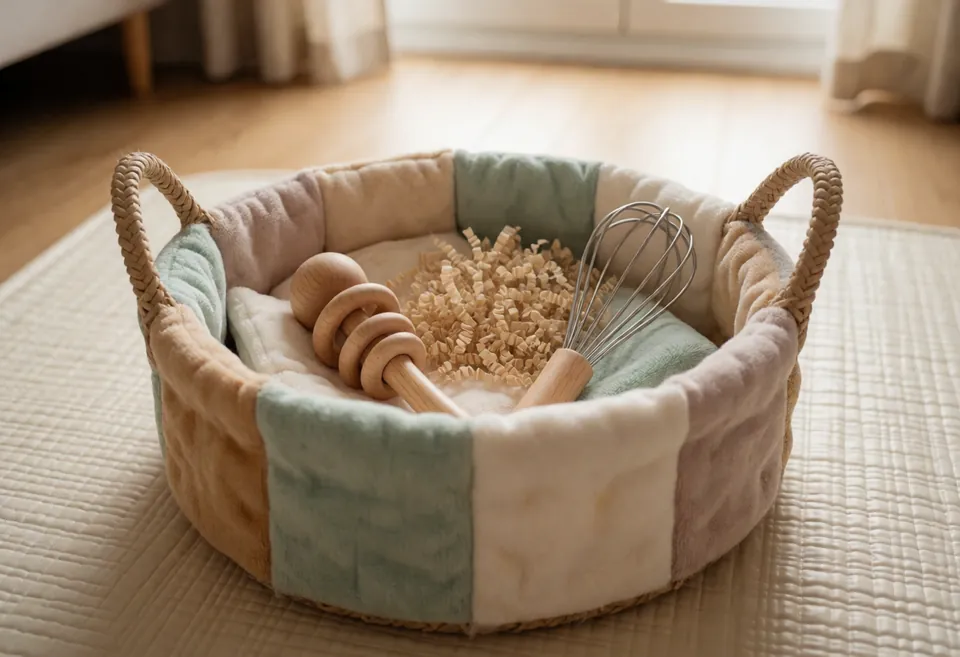
1. Treasure Basket Discovery — Fill a low basket with safe household objects (wooden spoon, silicone brush, metal lid, fabric scrap). Sit nearby and narrate what they're discovering. EYFS: Physical Development, Understanding the World.
2. Water Play Tray — Shallow tray, 2cm warm water, plastic cups and funnels. Supervision essential. EYFS: Physical Development, Maths.
3. Mirror Peek-a-Boo — Sit facing a low mirror. Cover your face, uncover with a big smile. They'll start joining in. EYFS: Personal & Social, Communication.
4. Texture Walk — Lay down different textures (fluffy towel, bubble wrap, smooth cardboard). Let them crawl or toddle across. EYFS: Physical Development.
5. Singing Sack — Fill a bag with objects matching nursery rhymes. They pick one, you sing the song. EYFS: Communication, Literacy.
2–3 Years: Exploration & Language
6. Colour Hunt — "Find me something RED!" They run around collecting. Count and name together. EYFS: Maths, Communication.
7. Playdough Kitchen — Three-ingredient playdough (flour, salt, water). Add plastic cutlery and bowls. EYFS: Physical Development, Expressive Arts.
8. Story Stones — Paint simple pictures on flat pebbles. They arrange to tell a story. EYFS: Literacy, Communication.
9. Bubble Pop Count — Blow bubbles. Count each pop aloud. EYFS: Maths, Physical Development.
10. Nature Collage — Collect leaves and petals on a walk. Glue onto paper. EYFS: Expressive Arts, Understanding the World.
3–5 Years: Thinking & Creating
11. Letter Hunt — Hide magnetic letters in sand. When they find one, say the sound together. EYFS: Literacy.
12. Supermarket Role-Play — Set up a "shop" with empty food boxes. Take turns, add a notepad. EYFS: Maths, Literacy, Personal & Social.
13. Recipe Following — Simple fairy cakes. They measure, pour, stir. EYFS: Maths, Physical Development.
14. Build a Bridge — "Get this car across the gap using only these blocks." EYFS: Problem-solving, Physical Development.
15. Feelings Faces — Draw face outlines on paper plates. Add eyes and mouths for happy, sad, angry. EYFS: Personal & Social, Expressive Arts.
Outdoor Activities (All Ages)
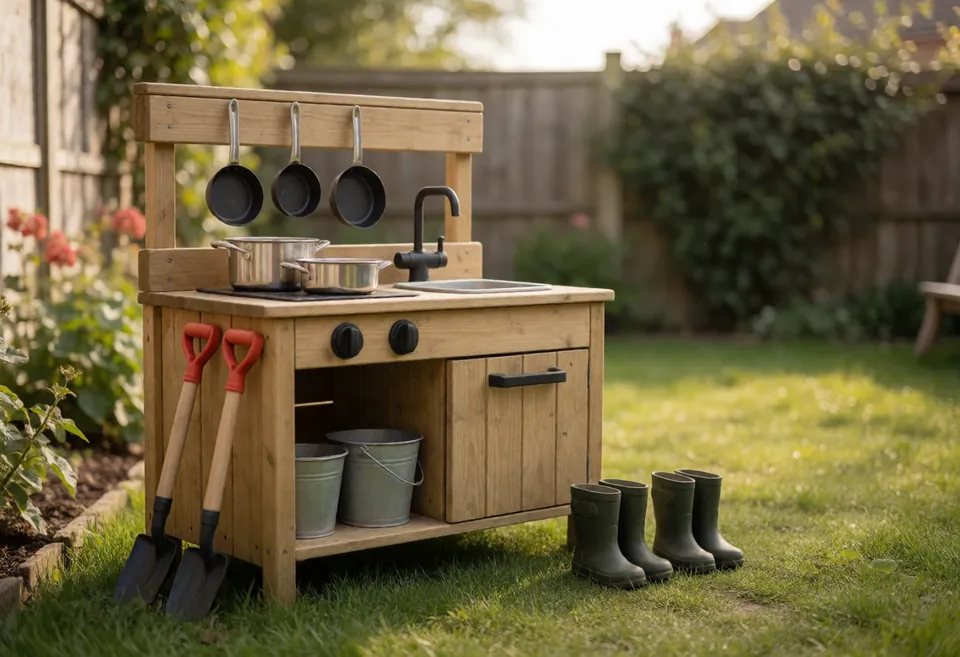
16. Mud Kitchen — Old pots, pans, spoons, and a patch of soil. EYFS: Everything.
17. Chalk Obstacle Course — Draw lines and zigzags. "Jump to the circle! Tiptoe along the line!" EYFS: Physical Development.
18. Plant & Grow — Cress seeds on damp cotton wool. Results in 3 days. EYFS: Understanding the World.
19. Shadow Drawing — Sunny day, chalk, trace shadows. EYFS: Expressive Arts, Physical Development.
20. Listening Walk — Count different sounds. Car, bird, dog, wind. EYFS: Communication, Understanding the World.
Quick Fillers
21. Dance Freeze · 22. Kim's Game · 23. Scarf Dancing · 24. Name That Sound · 25. What's in the Bag?
Four to try this week
Simple ideas aligned to the EYFS. Always supervise, and adapt to each child’s age and stage.
Autumn leaf rubbings
Pre-schoolers (3–5)Expressive Arts and DesignUnderstanding the World
You’ll need
- Fallen leaves of different shapes
- Plain paper
- Chunky wax crayons with the paper peeled off
- Clipboards or a tray
How to do it
- Collect leaves together on a walk and talk about the shapes, colours and textures.
- Put a leaf under the paper, vein side up.
- Rub the side of a crayon across the paper until the leaf pattern appears.
- Lay the leaves out in order, biggest to smallest, and let children name what they notice.
Look out for: Listen for descriptive words (crinkly, spiky, veins) and see whether children hold the crayon with a comfortable grip.
Keep it safe: Wash hands after handling leaves and check for anything sharp or mouldy.
Apple taste test
Pre-schoolers (3–5)MathematicsCommunication and LanguageUnderstanding the World
You’ll need
- Three or four apple varieties
- Chopping board and a safe knife (adult use)
- Paper plates
- A simple 'I like it' chart
How to do it
- Look at the whole apples first: colour, size, smell.
- Adult cuts thin slices; children taste each type and vote with a sticker.
- Count the votes together and decide which has the most and which the fewest.
- Plant a pip and see if it grows.
Look out for: Notice who uses number words and comparisons (more, fewer, the same) without prompting.
Keep it safe: Cut apples into thin slices or small pieces, never give a whole apple to a child under 4 to bite unsupervised, and check for allergies first.
Seaside sand and water tray
Toddlers (18 months–3)Understanding the WorldPhysical DevelopmentMathematics
You’ll need
- Shallow tray or tuff tray
- Sand and water
- Shells, buckets, small spades
- Sponges and cups of different sizes
How to do it
- Fill the tray with damp sand and add shells.
- Let children scoop, pour and fill different containers.
- Talk about full, empty, heavy, light.
- Bury shells for a treasure dig.
Look out for: See how they compare capacities and describe what happens when water meets sand.
Keep it safe: Never leave any child unattended near water, even a shallow tray, and check that shells are clean and smooth.
Minibeast hunt
Pre-schoolers (3–5)Understanding the WorldCommunication and Language
You’ll need
- Magnifying glasses
- Clear pots with air holes
- Paintbrushes for gentle moving
- A minibeast picture chart
How to do it
- Look under logs, stones and leaves carefully.
- Use a soft brush to move each minibeast into a pot.
- Count legs and describe what you can see.
- Return everything exactly where you found it.
Look out for: Listen for questions, observations and how gently children handle living things.
Keep it safe: Wash hands, supervise closely and avoid nettles, wasps and other stinging insects.