· 2 min read
Five EYFS Activities Ready in Two Minutes Flat
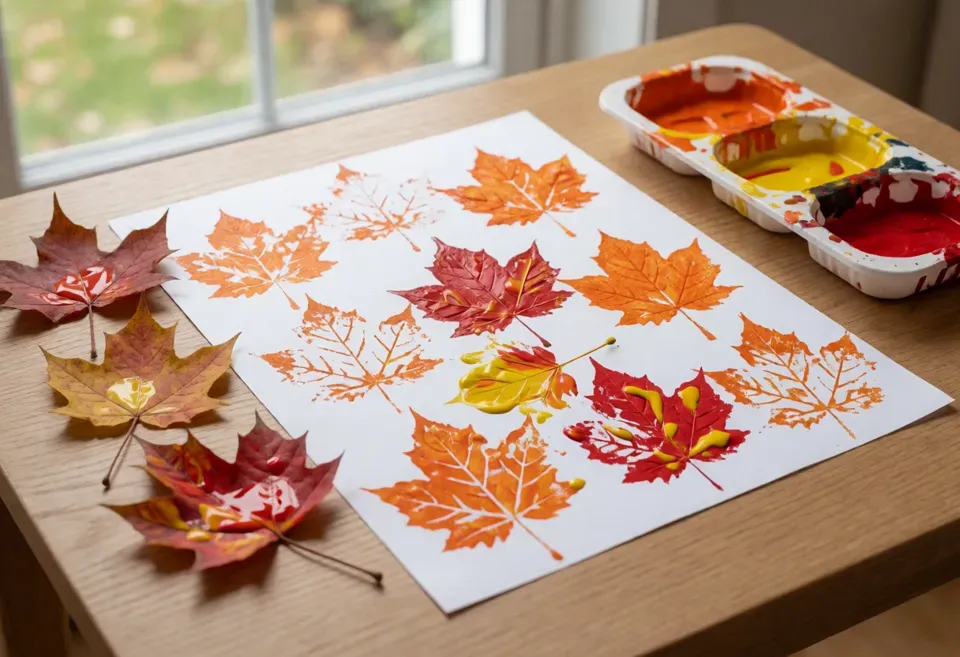
Short on prep time? These five EYFS-aligned activities take two minutes to set up and cover key areas of learning across the Early Years framework.
When You Need Something Good, Fast
There are mornings when your carefully planned activity just isn't happening. A child is overtired, your resources are in the wrong place, or someone new has arrived and you need to bridge a gap. In those moments, a quick-to-set-up activity that still hits the EYFS learning areas is worth its weight in gold.
These five ideas use things you likely already have to hand. They're not fillers — each one supports meaningful learning across Communication and Language, Personal, Social and Emotional Development, or Physical Development, depending on how you run them.
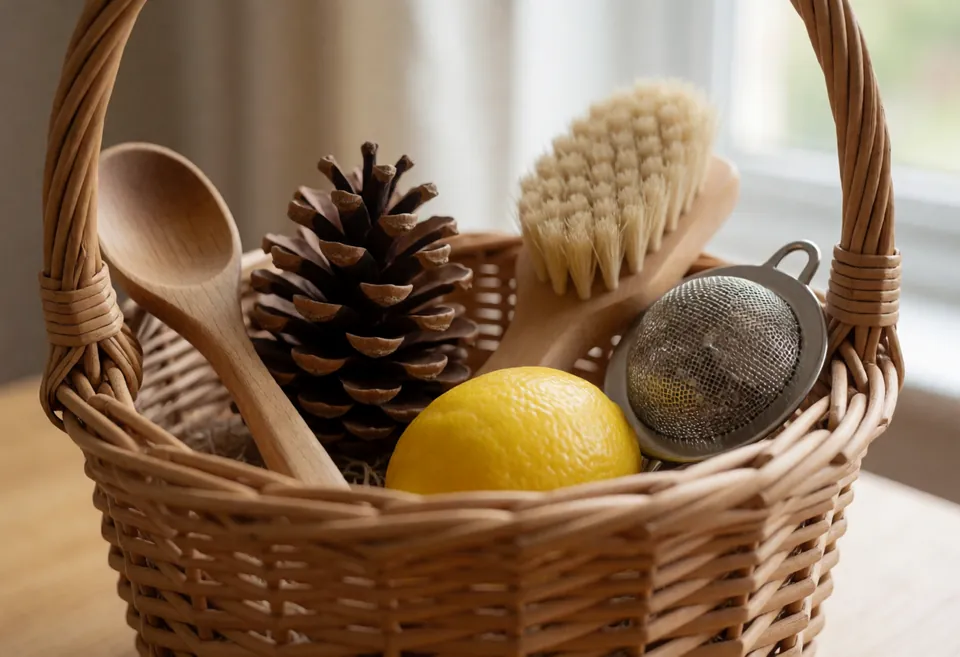
1. The Treasure Basket
Fill a low basket with safe everyday objects: a wooden spoon, a fabric scrap, a small metal tin, a smooth stone, a fir cone, a silicone spatula. That's it. Babies and toddlers will explore through touch, taste (supervised), sound, and sight — this is pure heuristic play. It supports sensory development and early problem-solving without a single printed worksheet. Prep time: under a minute if the basket lives somewhere accessible.
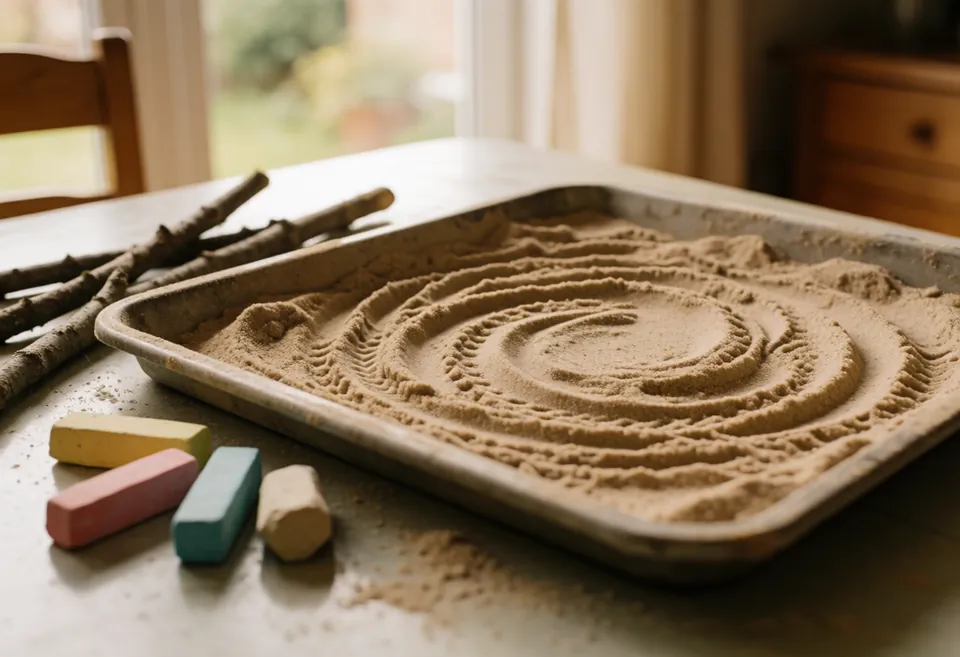
2. Mark-Making Tray
Pour a thin layer of cornflour, sand, or dry rice into a shallow tray. Hand a child a stick, a finger, or a small toy car. Let them go. Younger children will make random marks; older ones might draw lines, shapes, or attempt letters. This supports fine motor development and early writing skills — both clearly EYFS-aligned areas. You can add loose parts like leaves or pebbles for variation.
3. Story Stones (Grab-and-Go)
Keep a bag of stones painted or stickered with simple images — a house, a tree, a sun, a person, an animal. A child pulls three stones and tells you a story using them. For younger children, you tell the story together. This builds narrative language, vocabulary, and communication skills in a beautifully open-ended way. Make the stones once and they're ready whenever you need them.
4. Threading and Sorting
A handful of large pasta shapes, chunky beads, or wooden discs alongside some string, a colander, or a muffin tin is all you need. Children can sort by colour, size, or shape — or thread items onto string for fine motor practice. Sorting activities support early maths understanding (categorisation, pattern) and require sustained concentration, which feeds into the Characteristics of Effective Learning.
5. Mirror Play
A small unbreakable mirror placed at floor level opens up a world of self-discovery for babies and toddlers, and imaginative play for older children. You can extend it by adding loose materials — feathers, fabric, shiny spoons — around the mirror for reflection exploration. For two-year-olds this is rich PSED territory: recognising themselves, noticing expressions, beginning to understand identity.
Planning Doesn't Have to Mean Hours of Prep
The best activities are often the simplest. What matters is your involvement — the questions you ask, the language you model, the way you extend a child's thinking. These five ideas give you a solid starting point that you can adapt to the children in front of you on any given day.
These articles are general guidance for registered childminders in England, not legal or Ofsted advice. Always check the current EYFS statutory framework and your local authority childminding advisor for your specific situation.
Three more quick ideas
Simple ideas aligned to the EYFS. Always supervise, and adapt to each child’s age and stage.
Feelings faces in the mirror
Toddlers (18 months–3)Personal, Social and Emotional DevelopmentCommunication and Language
You’ll need
- A safe mirror
- Paper plates
- Pens
- Feelings pictures or a favourite picture book
How to do it
- Look in the mirror together and pull happy, sad and surprised faces.
- Draw a face on a plate for each feeling.
- Say 'I feel…' and match a plate to how you feel now.
- Read a book and point out how the characters feel.
Look out for: Notice which feeling words children use and whether they can name a feeling in others.
Keep it safe: Use a shatterproof mirror fixed at child height, and give under-3s large, blunt-tipped pens under close supervision.
Torch and shadow play
Pre-schoolers (3–5)Understanding the WorldExpressive Arts and Design
You’ll need
- Torches
- A white sheet or wall
- Toys and everyday objects
- A darkened corner or tent
How to do it
- Shine a torch on the wall and try to catch the light.
- Hold objects in front to make shadows and guess what they are.
- Make the shadow bigger and smaller by moving closer and further away.
- Trace a shadow onto paper.
Look out for: See whether children predict what will happen when the object moves.
Keep it safe: Never shine a torch into anyone's eyes.
Grow a cress head
Pre-schoolers (3–5)Understanding the WorldMathematics
You’ll need
- Empty eggshells or small pots
- Cotton wool or compost
- Cress seeds
- A marker to draw a face
How to do it
- Draw a face on the shell, fill with damp cotton wool and sprinkle on the seeds.
- Place on a windowsill and water lightly each day.
- Measure the 'hair' with a ruler or a strip of paper every day.
- Snip and taste it in a sandwich once it has grown.
Look out for: Look for sequencing (first, next, then), measuring language and patience.
Keep it safe: Wash hands after handling compost and check for allergies before tasting.