· 4 min read
Ofsted or a childminder agency: which should you register with?

In England you can become a childminder by registering directly with Ofsted or through an Ofsted-registered childminder agency. Both routes involve similar suitability checks, but supervision, inspection and ongoing support work differently.
For the short, step-by-step version, see how to register as a childminder. This page compares the two routes.
What childminder registration means
Registering as a childminder in England allows you to care for other people's children in your own home for reward. You must register with Ofsted or with an Ofsted-registered childminder agency if you will care for children under eight. The registration route you choose affects who inspects you and how you access support, but the same core suitability checks apply.
Direct Ofsted registration
With direct registration, you apply to Ofsted yourself. Ofsted checks your suitability, visits your setting, and makes a decision. If you are approved, Ofsted registers you and will inspect you directly against the requirements of the Early Years Register and the Childcare Register.
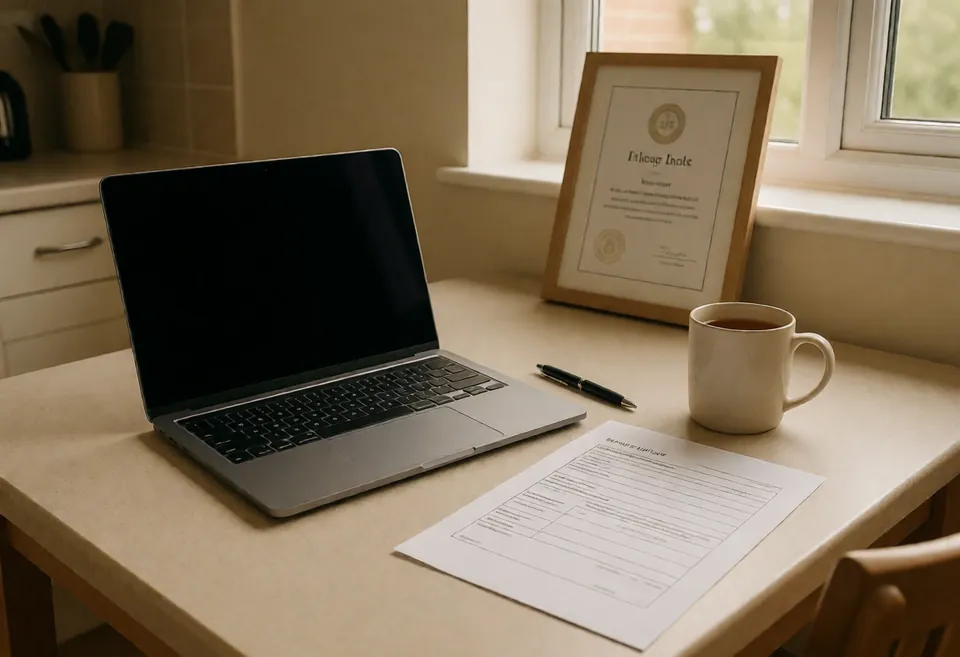
Typical steps:
- Confirm you are at least 18 and have the right to work in the UK
- Complete an enhanced DBS check for yourself and every household member aged 16 or over
- Complete a health declaration, usually through your GP
- Complete a paediatric first aid course that meets the EYFS requirements
- Complete a local authority or other safeguarding/child protection training
- Apply online through GOV.UK and pay the current application fee
- Prepare your home, including a risk assessment and safe sleeping arrangements if you will care for young children
- Have an Ofsted registration visit or home check
- Receive your certificate and start minding once registered
Registering with a childminder agency
A childminder agency is a body registered with Ofsted to register and support childminders. If you register with an agency, the agency registers you as a childminder and provides ongoing quality assurance. Ofsted inspects the agency rather than inspecting you as an individual childminder in most cases.

Typical steps:
- Find an Ofsted-registered childminder agency in your area
- Apply to the agency and check their requirements, fees and support offer
- Complete the same suitability checks: DBS for you and household members aged 16+, health declaration, paediatric first aid and safeguarding training
- Work with the agency to prepare your setting and policies
- The agency visits your home and registers you if suitable
- You continue to receive support, monitoring and sometimes training from the agency
Registering with an agency does not mean you become an employee. You remain self-employed and usually set your own hours and fees. Some new childminders find the support useful; others prefer the direct relationship with Ofsted.
How to decide
There is no single right answer. Consider these points:
- Support: agencies often offer more day-to-day help, especially in your first year.
- Inspection: direct Ofsted registration means Ofsted inspects your setting. Agency-registered childminders are usually inspected by their agency, and the agency is inspected by Ofsted.
- Cost: both routes have fees. Direct registration has an Ofsted application fee, and agencies charge their own fees. Check current figures on GOV.UK and with the agency.
- Local availability: not all areas have an active childminder agency.
- Long-term plans: some childminders switch from agency to direct registration later; check whether the agency allows this.
Quick checklist
- Confirm you are at least 18 and meet the right-to-work rules
- Decide which register you need based on the ages you will care for
- Complete DBS checks for you and household members aged 16+
- Book a paediatric first aid course
- Complete safeguarding/child protection training
- Complete training in understanding and delivering the EYFS
- Check the current Ofsted application fee or agency fee on GOV.UK
- Prepare your setting and write a simple risk assessment
- Keep copies of certificates and health check documents
If you want an easier way to build your policies and paperwork before registration, Policy & Play offers Ofsted-ready templates and Polly, a free AI assistant for childminders at Try Polly. Polly can help you draft policies, but final checks should always come from official sources.
FAQs
Do I need a childcare qualification to register as a childminder?
No formal childcare qualification is required to register, but you need paediatric first aid, safeguarding training and training that helps you understand and deliver the EYFS before you register. Some local authorities or agencies may ask for additional training.
How long does childminder registration take?
It varies depending on DBS checks, GP health checks, Ofsted or agency caseloads, and how quickly you complete training. Check current processing times on GOV.UK rather than relying on a fixed number.
Can I register if I rent my home?
You may be able to. Check your tenancy agreement, get your landlord's written permission before you apply, and check your home insurance covers childminding.
What if I only want to care for school-aged children?
You may only need the Childcare Register compulsory part, not the Early Years Register. However, if you later care for under-fives, you will need to apply for the Early Years Register too.